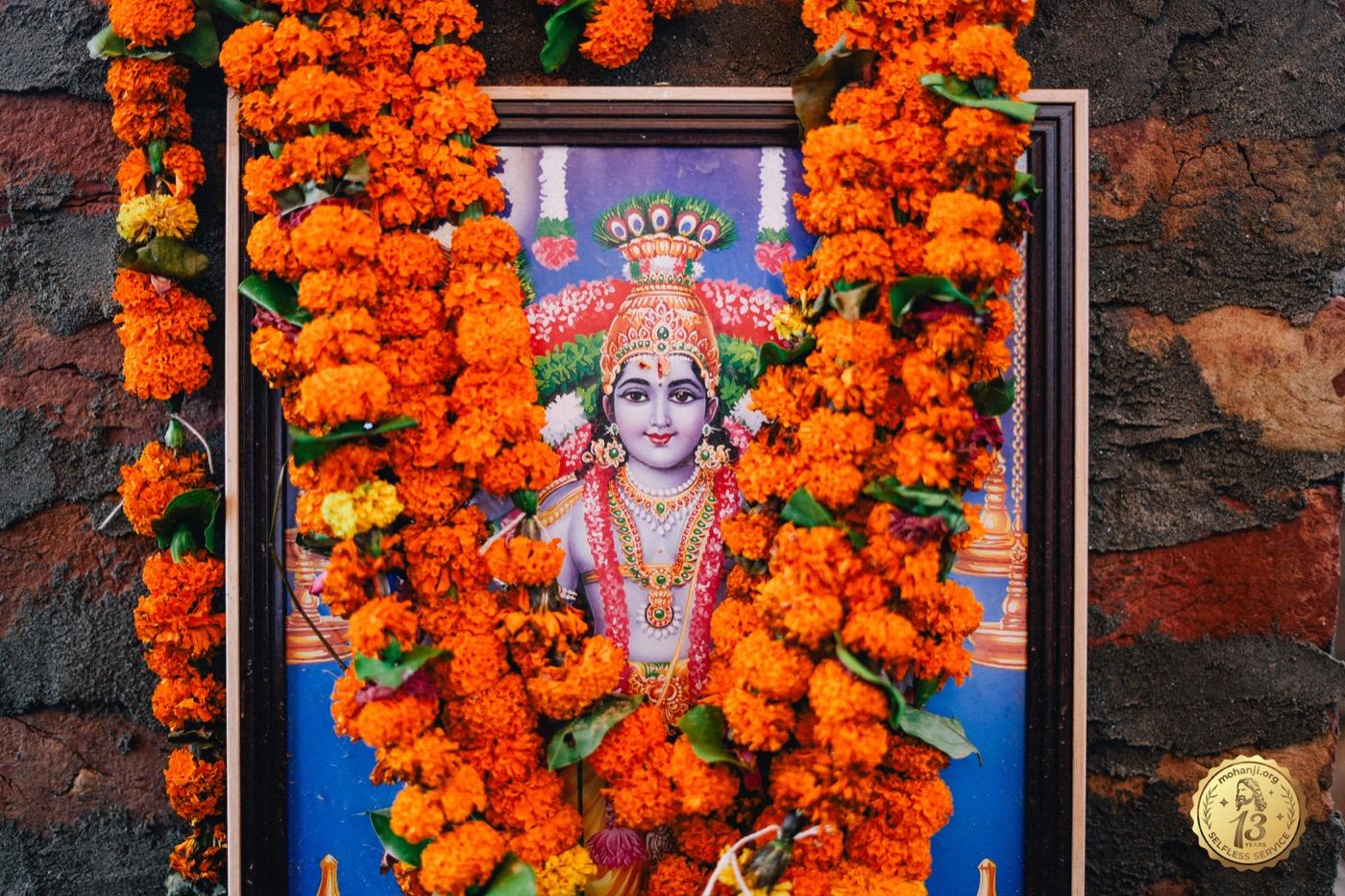
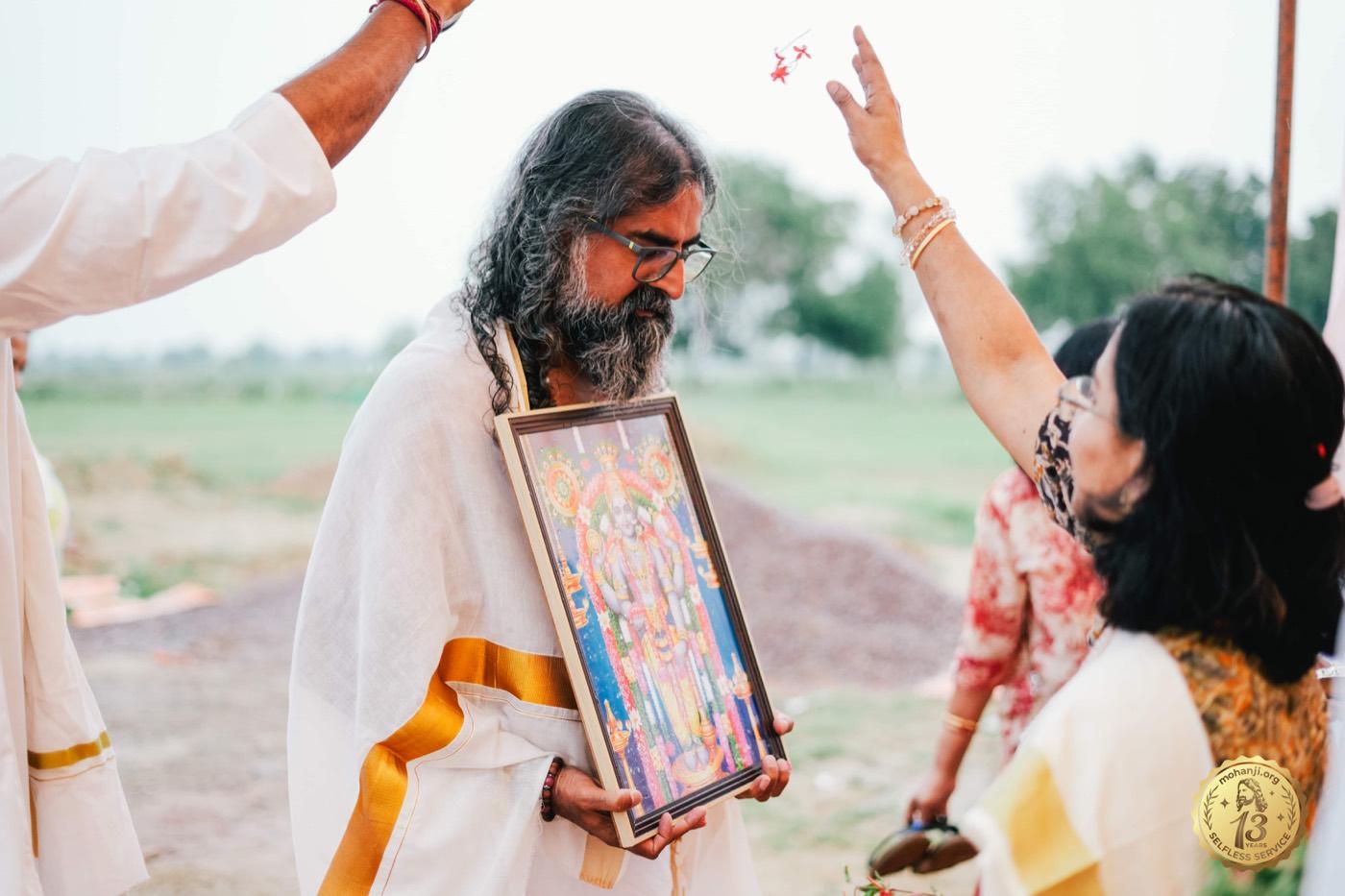
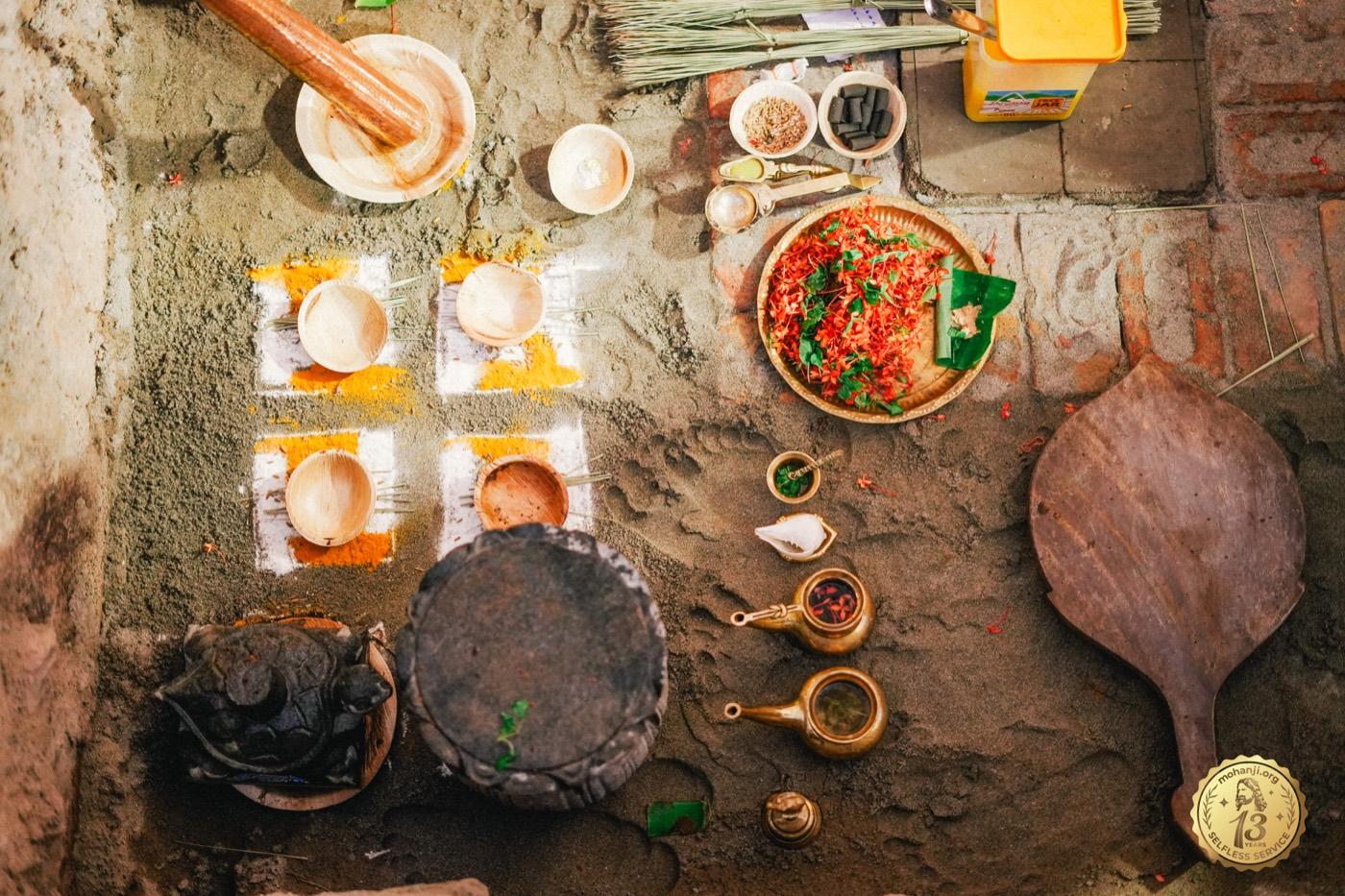
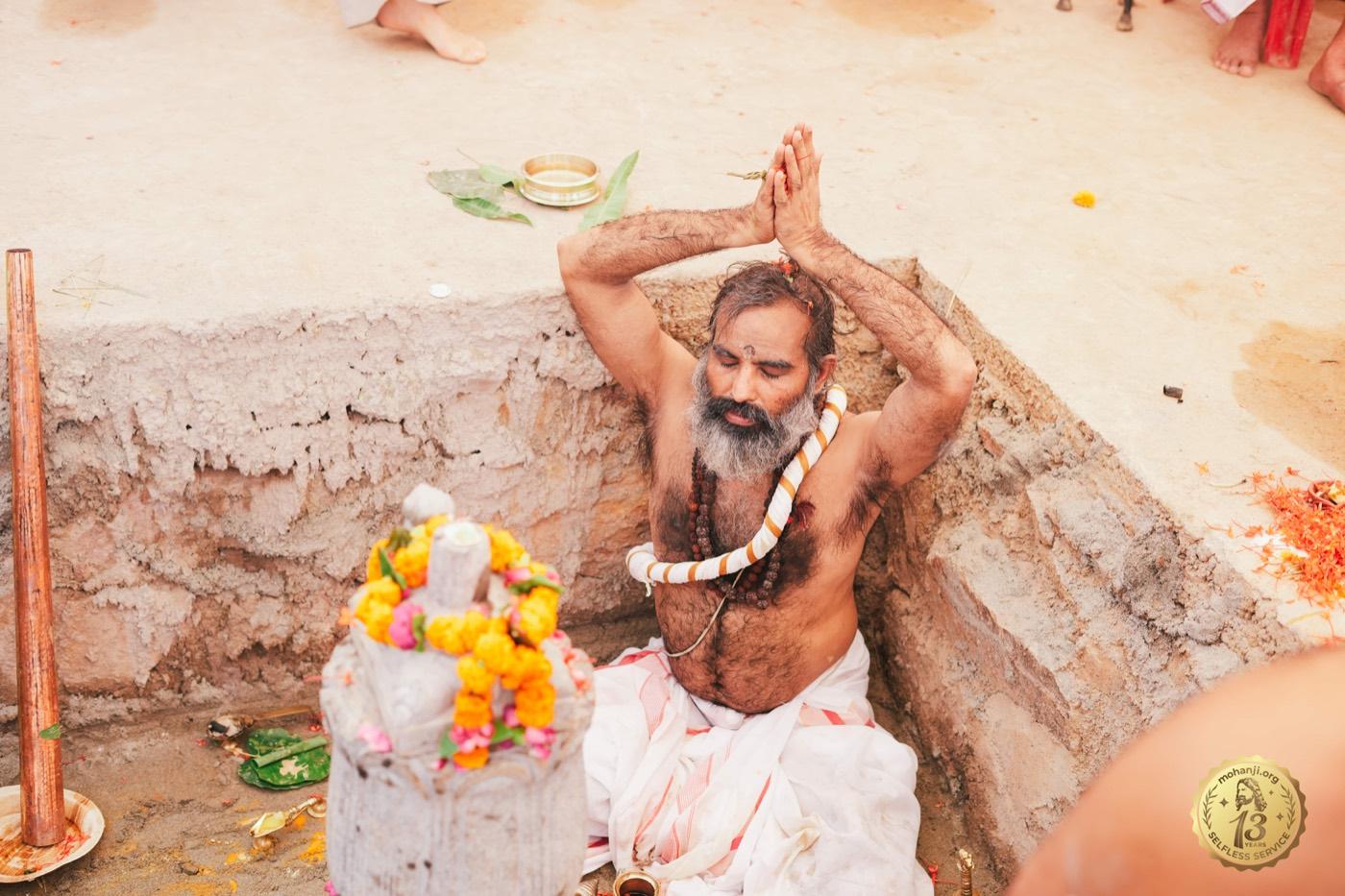
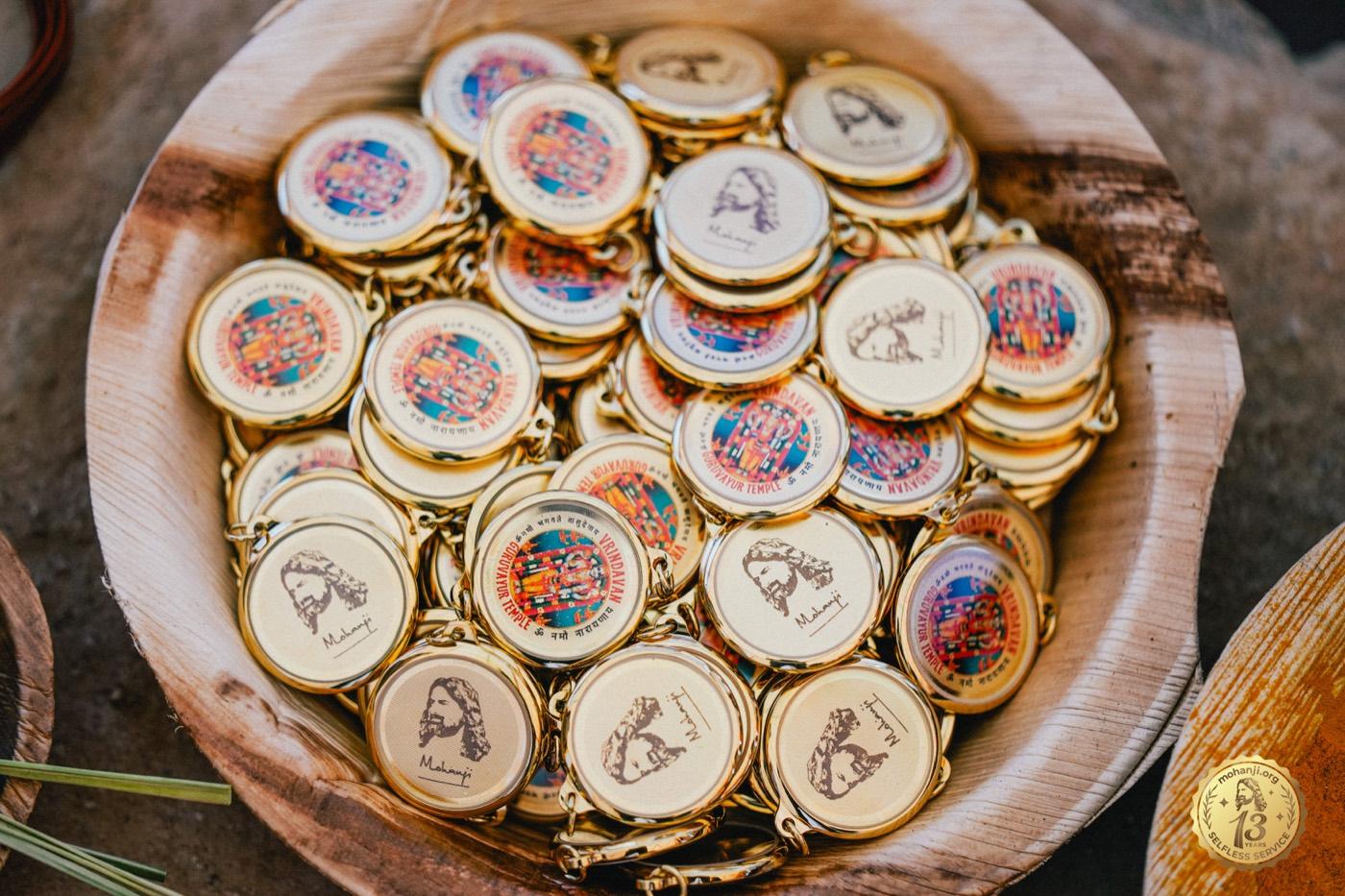
What is being raised in Vrindavan cannot be explained as a project. It has to be told as a story — one carried down across generations by wise teachers, gathered here into a single telling.
9-min reading take it slowly
Vaikuntha
In the beginning, before earth and stone, there was only Mahavishnu — the sustainer of all existence, consciousness without form, the ground from which everything would later arise.
From His navel rose a lotus, and on that lotus sat Brahma, the creator — the one whose task it would be to bring forth the worlds.
But before creation could begin, Brahma turned inward and tried to perceive the One from whom he had emerged — to see Mahavishnu, to feel the consciousness that was his own source, in its full form.
He could not. The vastness was beyond his sight.
So Brahma prayed: I cannot see You. I cannot feel You. How do I worship You? How do I even perceive You?
In answer, Mahavishnu drew His own light into a finite shape — a form that was less of matter and more of energy, a luminescence held within an outline — and placed it into Brahma's hands.
This is Me. He said. Worship this.
The form bore Shankha, Chakra, Gada and Padma in its four hands. These four signs of the Lord took manifest shape for the first time in this very form.
As wise teachers have long held
The first form on earth.
Held first in Brahma's hands. Before any other murti. Before any other shrine. Before creation had even begun. This is the form we know today as Guruvayurappan.
ॐ
The descent into matter
As creation unfolded, the Prajapatis — the original creators tasked with bringing forth the worlds — set to their work.
But there came a moment when their creativity itself faltered. The power to bring new things into being began to dim — even in those whose very nature was to create.
They turned to Brahma. Our creativity is gone. Can you help?
That is when Brahma placed the form into their hands — the very form Mahavishnu had once given to him. Worship this, he said. And your creativity will return.
They did. Creation resumed.
This idol's form, then, has always been linked to the moment when consciousness needs to return to creation. It is what is given when even the creators themselves cannot find their power.
And there is more — something we rarely speak of.
The form Mahavishnu gave was not always solid. It was not always the dense matter we see today. Across the yugas, the form has descended into matter exactly as our own consciousness has descended into matter.
○
Satya YugaFull brightness
The form was internally shining, glowing through and through. Consciousness and form were almost the same thing. To see the form was to perceive the Lord directly.
◔
Treta YugaLight beginning to condense
The light gathered inward. The form became denser, but still luminous.
◕
Dwapara YugaGlow contained within
The form glowed only from within. The outer surface had begun to solidify; the consciousness was now contained.
●
Kali Yuga · nowMatter — as we became matter
Our power to see consciousness directly had collapsed. So the form descended to meet us where we are.
The deity's becoming mirrors our own. As we lost the sight of consciousness, the form took on the density our eyes could finally see.
As we became matter, the form became matter.
ॐ
The Avatar took it home.
The form passed through many hands — through priests, through kings, through entire civilizations.
In Dwapara Yuga, it came to Vasudeva and Devaki. Because the Avatar Himself was about to descend. The Vishnu avatar — Krishna — was coming to them.
Krishna was born in Mathura. He was raised in Vrindavan. And when His work moved Him to Dwaraka, He took the form with Him. There He built a golden temple, installed the form, and worshipped it.
The Avatar Himself worshipped this form.
When Dwaraka was about to be reclaimed by the sea, Krishna gave Uddhava a final instruction: tell Brihaspati — Guru of the gods — to come and take the form to a safe place.
By the time Brihaspati arrived, the city was already underwater. With the help of Varuna — his own disciple, the lord of the waters — he retrieved the form from the depths.
Then Vayu, the wind, carried him through the Akasha marg in search of a new land. He met Parashurama, who told him of a land newly reclaimed from the sea — Kerala.
There, he found Shiva and Parvati already present, at the place we now call Mammiyur. Shiva turned, pointed, and said: that is where the form belongs.
By Shiva's instruction, Vishwakarma — the divine architect — built the temple per Vastu. The form was placed. And Shiva Himself performed the first puja.
Because the Guru and the Vayu brought the form, the place came to be called Guruvayur.
Even today, before circumambulating the sanctum at Guruvayur, devotees turn first toward Mammiyur and bow to Shiva and Parvati. It is an unbroken acknowledgment, across centuries, of the ones who pointed to the place. Without their pointing, there would be no Guruvayur.
When the priests asked, in the Prashnam, whether the Lord would receive His new temple in Vrindavan, the answer came directly. It was not symbolic. It was named.
"I am coming. It is my temple. This will be one of the most important temples of the world. I will bring my people for it — I will choose them. And those people, and their families, and their coming generations, will have great glory."— Bhagavan, through the Prashnam
Prashnam — a Vedic divinatory practice in the Kerala temple tradition. A qualified astrologer-priest, working with cowrie shells on a marked board, reads the divine response to a specific question. The form's own intent for the temple is revealed directly, not interpreted.
ॐ
The circle closes.
Krishna was born in Mathura.
He was raised in Vrindavan.
He reigned in Dwaraka.
The form He worshipped travelled, by Guru and by Vayu, to Guruvayur, where it has stood for centuries.
And now — after yugas — the essence of that form returns to Vrindavan. To the soil where Krishna lived as a boy. In His full glory.
The circle that began in Vaikuntha closes here, on the ground He once walked.
Before the temple, meet the Lord within
You do not have to wait for the doors to open.
Mohanji has offered a guided meditation — mantra, breath, and inner silence — that brings you into the presence of Guruvayurappan today, wherever you sit. The temple you are reading about begins there, in you.
A home in Vrindavan, raised by the people Bhagavan called.
The Prashnam was clear. The land was found. The foundation has been laid in fire and water. The form awaits its home. What remains is the building itself — and the hands of those drawn to take part.
What is being built
A Kerala-tradition temple raised by Vastu and Tantra Samuchaya. Pancha Prakara enclosures, Shadadhara energy grid, copper-roofed Sreekovil, Dhwajasthambham, wall of lamps, Mammiyur Shiva shrine.
Where, when
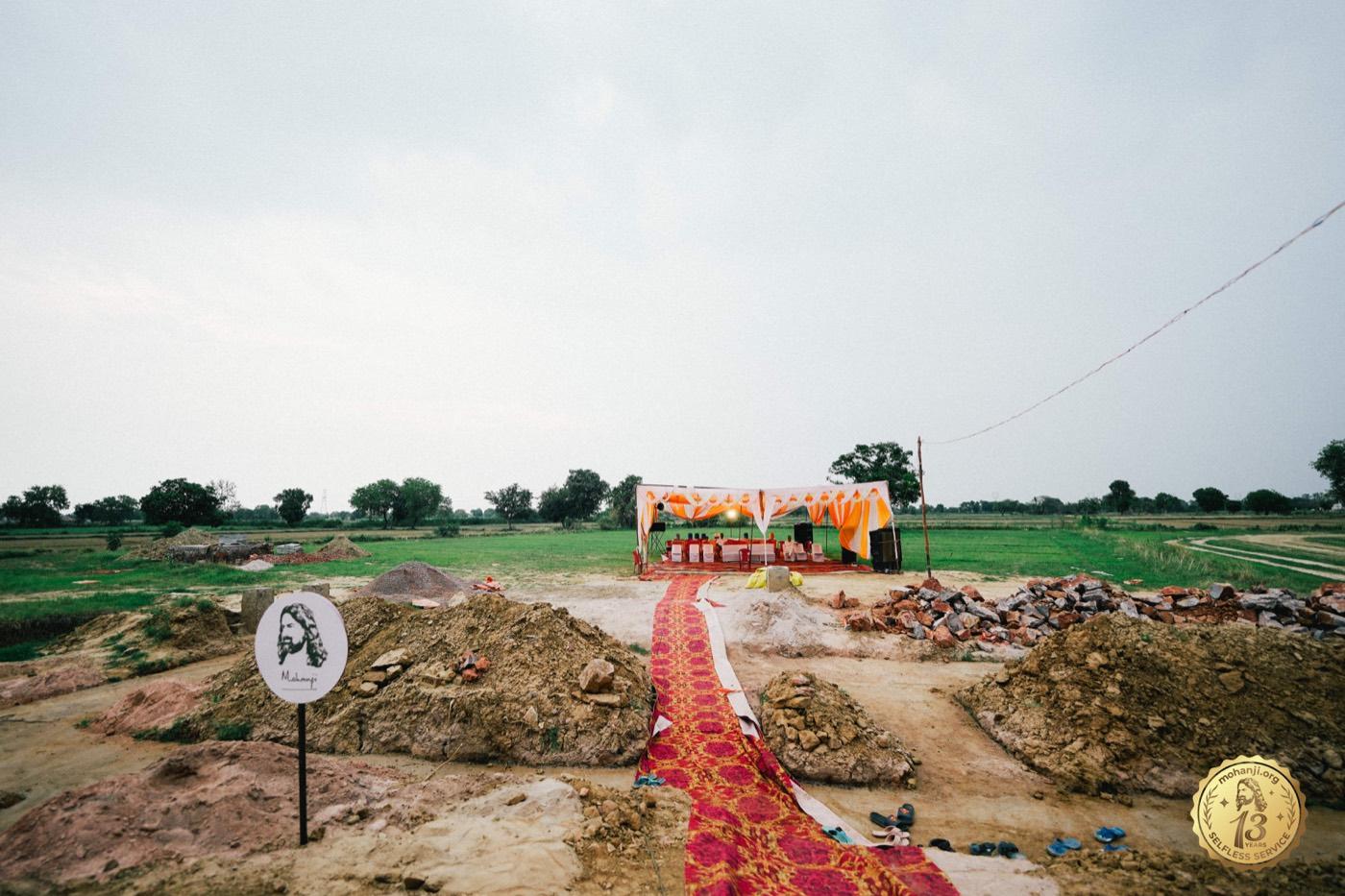
Consecrated land in Nandgaon, Vrindavan. Prana Pratishtha on 19 February 2027. Construction has been underway since the Shadadhara rites of June 2025.
Who is carrying it
The Mohanji Foundation, the Core Committee, the Thantris of the Kerala tradition, and a growing community of devotees who have already begun the seva.
The merit of constructing a temple is named, again and again, in the sacred texts.
Having acquired wealth and built a temple with a small portion of it, a person acquires piety and gains favors from Hari.
— Agni Purana
Mortals who help construct a temple of Lord Vishnu do not return to this world. They return to the abode of Lord Vishnu.
— Padma Purana
On building a temple of Sri Madhav, one can attain the eternal Vaikunthaloka.
— Vamana Purana
Walk through
A first look — the temple in 3D.
A three-minute walkthrough of the completed vision — the Sreekovil, the prakara, the gopurams, the kodi maram, the Koothambalam. The full temple complex as it will stand.
Moments from the project
Where the work is unfolding.
Rituals, blessings, the laying of the Shadadhara, the consecrated ground — the story is not only in words.
Om Namo Bhagavate VasudevayaOm Namo NarayanayaOm Namo Bhagavate VasudevayaOm Namo Narayanaya
-320x320.png&w=640&q=75)