-320x320.png&w=640&q=75)
The Gopurams
The east and west tiered entrance towers — the principal axis of the temple.
Built to the discipline of Pancha Prakara — five concentric enclosures arranged on the Shadadhara energy grid.
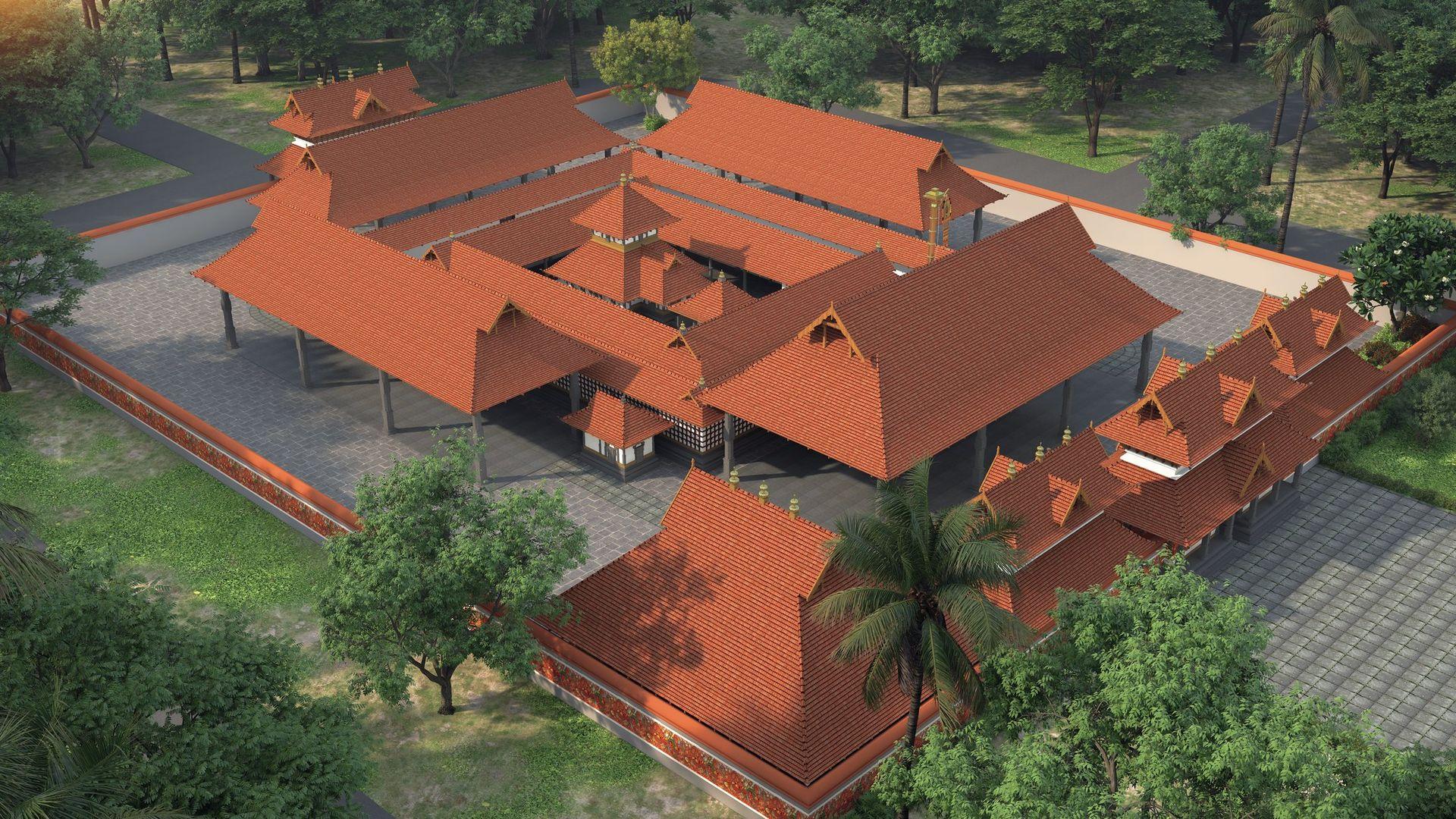
A Kerala temple is not just a building. It is a model of the human being. The Pancha Prakara — the five concentric walls — mirror the Pancha Kosha, the five sheaths of self in Vedanta. Each wall crossed is one layer of self set down. To walk inward is to remember.
The boundary at which the visitor pauses. The physical body, the shoes left behind, the world set aside.
The ring of the gold-plated Dhwajasthambham. Breath quickens; the body begins to remember it is alive.
Brass lamps line the third enclosure. As they are lit at dusk, the chatter of mind quiets in the rhythm of the flame.
The Namaskara Mandapam faces the sanctum here. The intellect surrenders; one bows full-length to the ground.
The closest enclosure, where only the priest may enter. The deity sits at the centre — and so, the tradition holds, do you.
The science behind it: the five koshas are taught in the Taittiriya Upanishad as concentric sheaths covering the Atman — true self. The Kerala temple makes this teaching walkable. Each step from the outer wall toward the sanctum corresponds to a sheath peeling away. The pradakshina path is the journey from annamaya (body) to anandamaya (bliss). The deity at the centre, in tradition, is not separate from the one who walks in.
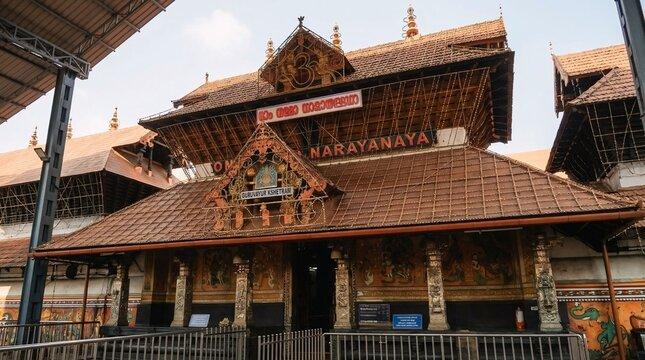
Beneath the sanctum, before the foundation is poured, the Shadadhara is laid — six energy points buried in a precise geometry beneath where the deity will stand. They correspond to the six chakras of the human body, mapping the temple onto the body of the worshipper.
From the first stone, the temple is an instrument tuned to the body of anyone who enters.
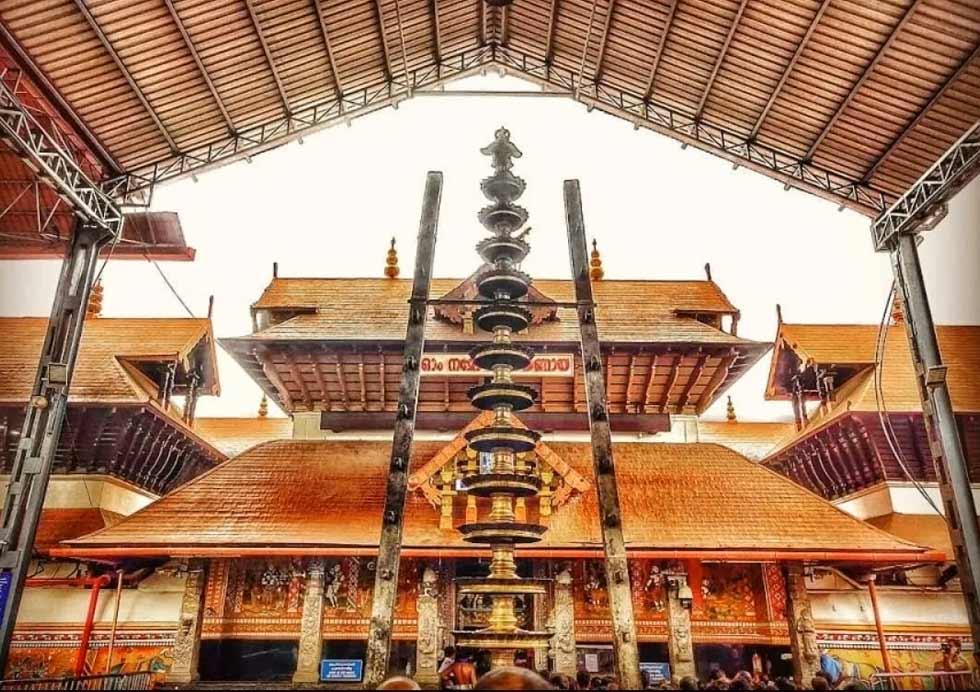
Six things to know by name when you walk through Guruvayurappan's home.
The east and west tiered entrance towers — the principal axis of the temple.
The kodi maram — gold-plated ceremonial flagstaff, the first element raised in the courtyard, as it stands at Guruvayur.
The Vilakkumaadam — brass nilavilakku set into the prakara walls, lit at each dusk worship until the whole precinct glows.

The Namaskara Mandapam — directly in front of the sanctum, where one bows full-length to the ground.
The Koothambalam — where Koothu, Kutiyattam, and devotional performance take place as offering.
The Sreekovil — cool stone, low ceiling, the seat of the deity. The destination of every step within the prakara.
Guruvayurappan at the centre, with Ganesha, Bhagavati, and Ayyappa.
Meet each deity